The Ultimate Guide to Wine Process Pumps: Achieving Zero Oxygen Transfer in Your Cellar
In the world of high-end winemaking, the journey from vineyard to bottle is a series of critical interventions. Every decision made in the cellar—from fermentation temperature to barrel selection—is designed to preserve the unique expression of the fruit. However, one of the most common points of quality degradation occurs not in the vineyard, but during the physical movement of the liquid.
For Canadian winemakers, whether operating in the historic soils of the Niagara Peninsula or the rugged terrain of the Okanagan Valley, the equipment used for transfer is more than just a utility; it is a guardian of sensory integrity. As the official Canadian partner for the latest in rotary piston technology, we are introducing a new standard for the industry: a wine process pump designed specifically for Zero Oxygen Transfer and total Mobile Versatility.
The Silent Enemy: Understanding Oxygen Pickup
Oxygen is a paradox in winemaking. In the early stages of fermentation, it is vital for yeast health and tannin stabilization. But once the wine begins its journey toward maturation and bottling, oxygen becomes the primary enemy of freshness.
Traditional pumping methods—such as centrifugal or flexible impeller pumps—often suffer from a fatal flaw: turbulence. When wine is moved at high speeds or through seals that are not perfectly hermetic, micro-bubbles of air are “sheared” into the liquid. This is known as dissolved oxygen (DO) pickup. Even a small increase in DO can lead to:
- Aromatic Flattening: The delicate floral and fruity notes are the first to vanish.
- Premature Aging: The wine loses its vibrant hue and begins to brown (oxidize).
- Microbial Risk: Increased oxygen can provide a foothold for spoilage organisms like Acetobacter.
Our advanced wine pump technology solves this through a hermetically sealed internal environment. By eliminating “dead spaces” within the pump head and utilizing precision-engineered rotary pistons, the system ensures that the wine is moved in a solid “plug,” preventing any atmospheric air from entering the stream. This Zero Oxygen Transfer capability is the difference between a wine that tastes “tired” and one that vibrates with life.
The Science of “Gentle Flow”
Beyond oxygen, physical trauma to the wine is a major concern. Many standard pumps operate like a blender, spinning at high RPMs that create significant “shear stress.” This mechanical force can literally tear apart the long-chain molecules that give a premium red wine its structure and mouthfeel.
The rotary piston design we provide operates on a different principle. Instead of high-speed spinning, it uses two synchronized rotors that move in a gentle, rolling motion. This creates a high-volume flow at very low revolutions.
- Seed Integrity: During must transfer, it is critical not to crush seeds, which release bitter, green tannins. Our pumps handle solids with such care that the seeds remain intact.
- Colloidal Stability: By avoiding high-shear environments, the natural pigments and tannins remain suspended, preserving the wine’s “texture.”
Mobility: A Pump for Every Corner of the Cellar
Winery floor plans are rarely static. Between harvest, racking, and bottling, equipment needs to move quickly and safely. A pump that is bolted to the floor is a bottleneck; a pump that is difficult to move is a safety hazard.
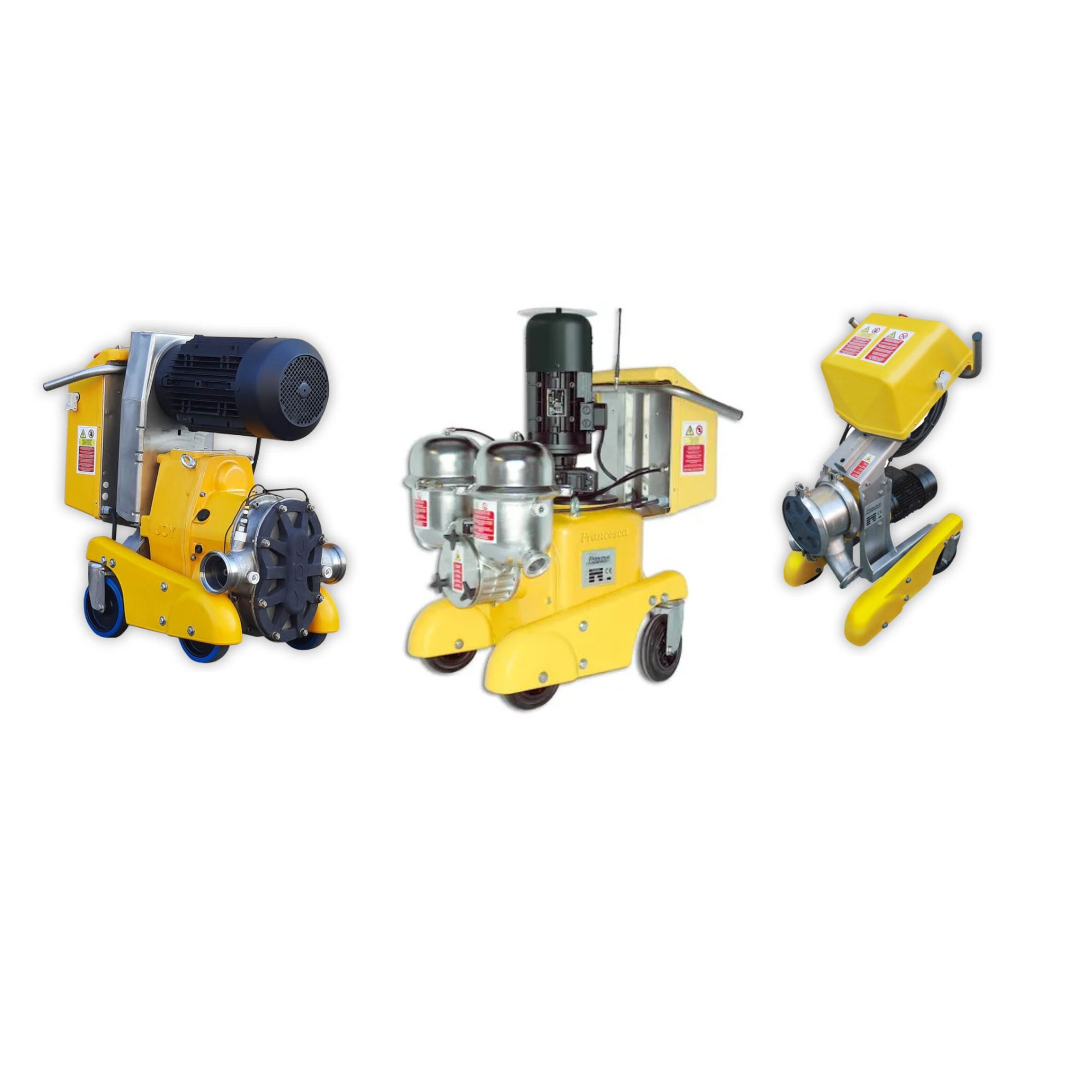
Our mobile wine pumps are engineered with the “Cellar-First” philosophy. We recognize that Canadian wineries often deal with tight aisles and uneven floors.
- The Chassis: Built on a robust, stainless steel mobile frame, these units feature large, winery-grade wheels that glide over floor drains and hoses without catching.
- Compact Footprint: Unlike horizontal pumps that take up vast amounts of floor space, our vertical pump head design allows for a much smaller footprint. You can tuck this pump into a corner or position it between two tanks without blocking the walkway.
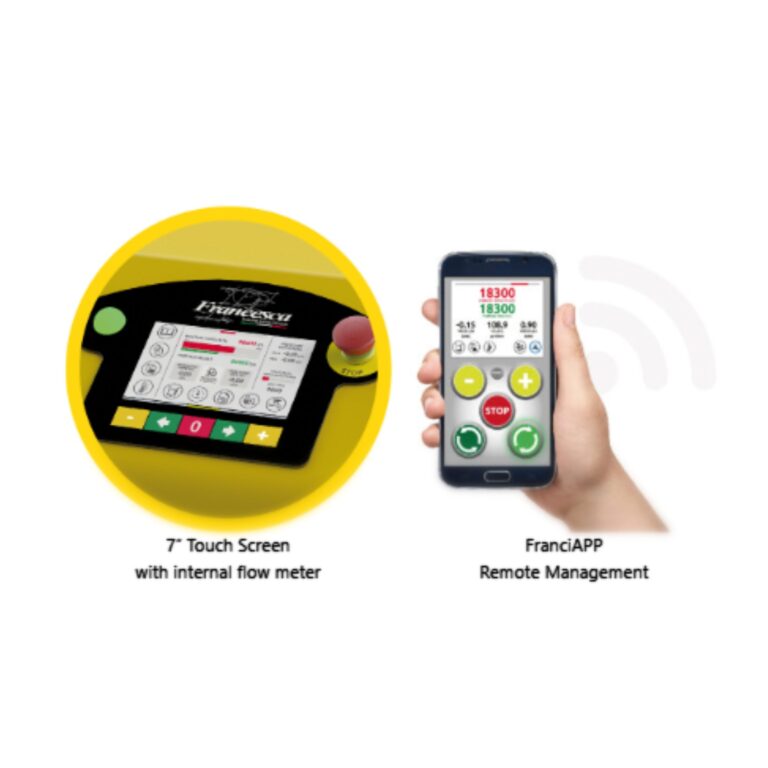
- Integrated Intelligence: Each unit comes equipped with a Variable Frequency Drive (VFD). This allows the operator to dial in the exact flow rate needed—from a slow trickle for barrel topping to a high-volume surge for tank-to-tank transfer—all at the touch of a button.
Versatility Across the Wine Process
A true wine process pump must be a multi-tasker. It is a significant investment, and it should deliver value throughout the entire winemaking calendar.
1. Must and Pomace Transfer
During harvest, the pump must be able to move thick liquids containing skins and seeds. The high suction capability of our rotary piston technology allows it to pull must from the fermenter without clogging, moving it gently to the press.
2. Precision Pump-Overs
For red wine fermentation, “cap management” is essential. Our pumps can be programmed for automated pump-over cycles. Because they provide a constant, pulse-free flow, they ensure even extraction across the cap, resulting in a more balanced and harmonious wine.
3. Filtration Support
Feeding a filter—whether it’s a cross-flow, plate-and-frame, or DE filter—requires incredibly steady pressure. Any “pulsing” in the line can blind the filter media or force solids through. Our pumps provide a linear, consistent flow that maximizes filter efficiency and extends the life of your expensive filter membranes.
4. The Bottling Line
The final step is the most nerve-wracking. Pumping to a bottling line requires extreme precision to avoid pressure spikes that can cause inconsistent fills or foaming. Our pumps’ ability to operate at ultra-low speeds with high torque makes them the perfect partner for any bottling operation.
Maintenance and the “Clean-In-Place” (CIP) Standard
In a winery, you are only as good as your last cleaning cycle. Cross-contamination between batches—or worse, between a finished wine and a fermenting must—can ruin a vintage.
We have prioritized sanitation in our design. The pump head is designed for Clean-In-Place (CIP) operations.
- No Dead Zones: The internal geometry is highly polished and lacks the nooks and crannies where tartrates or yeast can hide.
- Quick Disassembly: If deep cleaning is required, the pump head can be opened in minutes without specialized tools, allowing for a full visual inspection of the seals and pistons.
Why Choose This Technology for Your Canadian Winery?
Canada’s wine regions are defined by their pursuit of cool-climate elegance. Whether you are producing crisp Sparkling wine, aromatic Riesling, or structured Cabernet Franc, the common thread is a need for precision.
By choosing a pump that guarantees Zero Oxygen Transfer, you are protecting the investment you’ve made in your vineyard. You are ensuring that the “sense of place” you worked so hard to capture remains in the bottle for the consumer to enjoy.
As your local Canadian distributor, we don’t just sell equipment; we provide technical support tailored to the unique challenges of the Canadian climate and marketplace. We understand the logistics of moving wine in cold winters and the urgency of a fast-paced harvest.
Conclusion: Elevate Your Process
The evolution of winemaking is a move toward less “intervention” and more “preservation.” By upgrading to a modern wine process pump, you are choosing a path of technical excellence.
Stop settling for pumps that “just get the job done” while sacrificing your wine’s aromatics and structure. It is time to embrace a system that is as mobile, versatile, and dedicated to quality as you are.
Ready to see the difference a Zero Oxygen Transfer pump can make? Contact our team today for a consultation or a technical walk-through. Let’s make your next vintage the best one yet.